The Existential Vacuum
“Definition: The feeling of the total and ultimate meaninglessness of their lives.
The existential vacuum is a widespread phenomenon of the twentieth century.
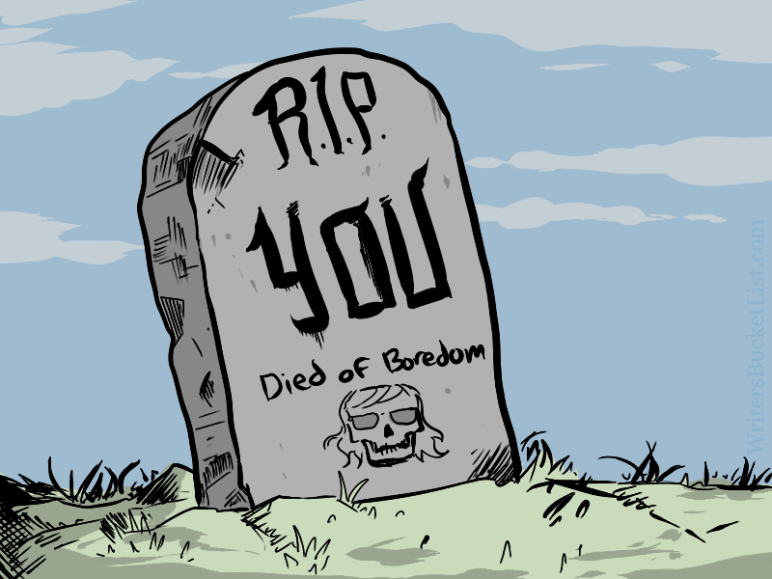
It manifests itself mainly in a state of boredom.
Boredom is causing, and bringing to psychiatrists, more problems to solve than distress.”
– Viktor Frankl (psychiatrist and Holocaust survivor), Men’s Search for Meaning, page 106
Now in the twenty-first century, I feel the problem of the existential vacuum is as relevant as ever. Compare to the last century, it is getting bigger and becoming more rampant over time. Stress, addiction, anxiety and depression are the ever-increasing warning signs.
As technology advances, the development of artificial intelligence (robotics) in particular, this will probably lead to increased leisure time for the average worker. But what good is free time if many of us do not know what to do with it?
How did we get here in the first place? Can we find any clues in the past to guide us in dealing with the present problem?
Zooming out to look at the big picture of human history, similar to animals, the homo sapiens species have mostly been concerned about survival over some 300,000-years.
Two critical factors for survival: food and safety.
Humans have evolved the Five Fs, the most primal drives to gather food and ensure safety: feeding, fighting, fleeing, be-friending and mating.
At the beginning, safety was against other animals and natural disasters. As humans mastered the fire and improved tools over the stone, bronze and iron ages, other human tribes become the major threats. Warfare between mankind continued from the dawn of man till this very day.
From 300,000BC till 1800AD, most of the human population had been engaged in hunter-gatherer and farmer modes of life focused in food production. Boredom was a luxury only afforded to the ruling class which emerged after Agricultural Revolution around 8000BC.
For most of human history, the primary problem was food. And land is the most critical element in food production.
In order to produce more food, humans have developed many strategies such as making more babies, improving tools, domesticating animals, cross-breeding crop plants and animals, enslaving other people, building irrigation projects, pillaging, colonizing or taking other people’s land, keeping an army to fight off enemy forces, developing a government to run the country, codifying laws to resolve land disputes.
Meaning was found in working on the land to raise a family. Honour was gained in fighting in battles to protect the homeland. Respect was due in entering civil office to govern the people.
In those days, innate instinct tells a man what he has to do, strong traditions tell him what he ought to do. Life was simple. The path was clear.
The Industrial Revolution around 1800AD changed life for mankind forever. Survival is no longer humanity’s top concern. Hence food is no more the primary problem. And land is no longer the most critical element in production.
For the first time in history, we have an abundance of food. World human population had taken 300,000 years to reach 1 billion. It has soared from 1 to 7 billion over the last two hundred years. There is still starvation in certain parts of the world. But the issue is not the lack of food but the uneven distribution of food.
Land is no longer the deciding factor in production. Russia and Canada, the two biggest countries in the world do not top the chart of national GDPs. In fact, they rank lower than the much smaller countries of Germany and Japan. The success of the latter two countries is due to their superior technologies which are fruits of the strong work ethic and brilliant creativity of their people.
Food production, or agriculture, is no longer the main industry of the modern developed world. However, it remains the primary industry in much of the developing world. This distinction is of critical importance when it comes to understanding the First and Third world divide.
Generally speaking, third world countries suffer from problems of survival: food, water, shelter, safety, etc. First world countries suffer from problems of quality of life: health, money, relationship, boredom, etc.
Put a third world person in a first world country, he or she will first become happy for the problem of survival had been solved. But this happiness will be short-lived. Soon he/she will feel stressed about making money to keep up with the neighbours, anxious about the weight his/her body is putting on and depressed about the lack-lustre relationship with the partner, etc.
Put a first world person in a third world country, he or she will first feel happy that people all around are not thinking about making money and losing weight all the time. but this happiness will be short-lived. Soon he/she discovers the harsh reality of life in a third-world country. Every day is a struggle for survival. People are content with less not out of conscious choice, but out of sheer necessity.
When a country develops herself and enters the first world. The pain experienced by the people changes, but suffering remains. As technology leaps from automated to autonomous, more leisure time will be granted to workers. I anticipate the gradual implementation of the four-day working week around the world.
However, having more free time does not automatically make us happier. Rather, it is likely to lead to more boredom. “Now what?” A question will be asked more often than ever. In boredom, the lack of meaning in one’s life and the void within oneself becomes glaringly obvious, immense suffering follows.
“Life is suffering.” Buddha stated the first noble truth over 2000 years ago.
Two thousand years of development has greatly reduced physical pain, but not psychological suffering.
Q1: What is the point of development (economic, social and technological) if it does not reduce suffering?
Q2: What is the root of boredom/suffering?
Q2.1: Frankl’s answer: Boredom arises from the lack of meaning in one’s life.
Q2.2: Buddha’s answer: Suffering arises from attachment to desires.
Q2.3: Tolle’s answer: We suffer because of our identification with the egoic mind.
Q3: How to end boredom/suffering?
Q3.1: Frankl’s solution (Logotherapy): Finding the meaning in one’s life and living it out.
Q3.2: Buddha’s solution (Eightfold Path): Suffering ceases when attachment to desire ceases.
Q3.3: Tolle’s solution (The Power of Now): Free oneself from the identification with the egoic mind. Be present in the Now.
In the upcoming discussions, I shall embark on a journey that will visit people and places that contains some answers to the above big questions on life.
– Zhen EX

 BLISS RITUALS